Trout fishing is one of the most rewarding pursuits in the outdoor world — but showing up to the water unprepared is a fast track to frustration. Whether you’re wading a cold mountain stream for wild cutthroats or casting a mountain lake for stocked rainbows, having the right equipment makes all the difference between a memorable day and a long drive home empty-handed.
You don’t need to spend a fortune to fish trout effectively. But you do need the right tools. Here’s a breakdown of the must-have equipment every trout angler should have in their arsenal.
1. The Rod: Your Most Important Investment
Your rod is the foundation of your entire setup, and for trout fishing, the right choice depends on the water you’re targeting and the method you prefer.
For fly fishing: A 9-foot, 4-weight or 5-weight fly rod is the gold standard for most trout situations. The 4-weight is ideal for smaller streams and delicate presentations with dry flies, while the 5-weight handles bigger water and heavier nymphs with ease. Brands like Orvis, Sage, and Redington offer excellent options across a wide price range. If you’re fishing backcountry or hiking into remote locations, a 4-piece travel rod that breaks down compactly is a smart investment.
For spinning: A light to ultralight spinning rod in the 5’6″ to 7′ range gives you the sensitivity and action needed for small trout lures and live bait presentations. Look for a rod with a fast or medium-fast action and a light power rating. Shakespeare, St. Croix, and Ugly Stik all produce reliable options that won’t break the bank.
2. Reel and Line: Match Your Setup
A quality reel balances your rod and manages your line under pressure. For fly fishing, a large arbor reel matched to your rod weight with a smooth drag system is essential. You don’t need to spend hundreds here — mid-range reels from Pflueger, Ross, or Lamson perform beautifully for most trout angling situations.
For spinning setups, a size 1000 to 2500 spinning reel is the sweet spot for trout. Look for a reel with a high gear ratio (6:1 or higher) for quick line retrieval and a front drag system for smooth, consistent tension during the fight.
Line matters more than most beginners realize. For fly fishing, a weight-forward floating line matched to your rod weight covers the majority of trout situations. Add a 9-foot tapered leader and 4x to 6x fluorocarbon tippet for a complete presentation system. For spinning, 4–6 lb monofilament or a 10 lb braid with a fluorocarbon leader gives you sensitivity and near-invisible presentation.
3. Terminal Tackle: Flies, Lures, and Hooks
What you tie on the end of your line is what actually catches fish, so build a versatile selection before you hit the water.
For fly anglers, a well-stocked fly box should cover three categories:
- Dry flies — Elk Hair Caddis (sizes 14–18), Parachute Adams (sizes 14–18), and Stimulators cover most surface-feeding situations.
- Nymphs — Hare’s Ear, Pheasant Tail, and Copper John patterns in sizes 14–18 are proven producers subsurface.
- Streamers — A few Wooly Buggers in black and olive give you a searching pattern for aggressive fish or off-color water.
For spin anglers, keep it simple and effective:
- In-line spinners like Rooster Tails and Mepps Aglia in sizes 0–2 are classic trout producers in streams and rivers.
- Small spoons like the Kastmaster or Little Cleo work well in lakes and deeper pools.
- Soft plastics — small curly tail grubs on a 1/16 oz jig head are deadly on pressured fish that have seen every hard bait in the box.
4. Waders and Wading Boots: Get in the Water
Access is everything in trout fishing, and waders open up water you simply can’t reach from the bank. Chest waders in neoprene (for cold water) or breathable material like Gore-Tex (for warmer conditions and all-day comfort) are the two main options. For most three-season fishing, breathable waders are the better choice — they’re lighter, pack smaller, and keep you far more comfortable over a long day on the water.
Pair your waders with quality wading boots featuring felt or rubber soles. Felt provides superior grip on slick, algae-covered rocks. Rubber lugged soles are more versatile and are required in many states that have banned felt to prevent the spread of aquatic invasive species — check your local regulations before you buy.
5. Polarized Sunglasses: See the Fish Before They See You
This one is non-negotiable. Polarized lenses cut the surface glare off the water, allowing you to spot fish, read structure, and identify feeding lanes that are completely invisible to the naked eye. Amber or copper lenses excel in low-light and overcast conditions. Gray lenses are better in bright, high-sun situations.
Costa, Smith, and Oakley make premium fishing-specific options, but brands like Goodr and Duduma offer solid polarized lenses at a fraction of the cost if budget is a concern.
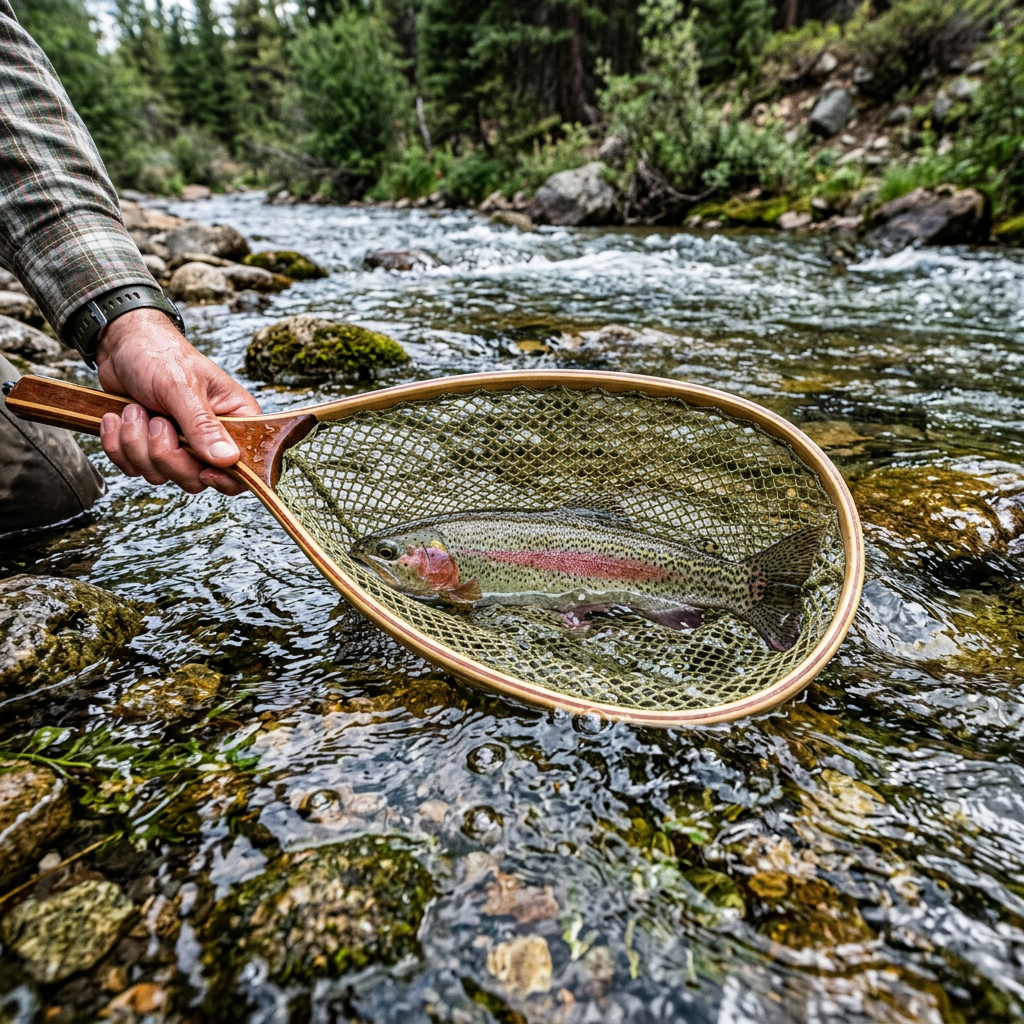
6. A Quality Landing Net
A rubber-mesh landing net protects the fish’s slime coat during the catch-and-release process and helps you land fish more efficiently, especially when fishing solo. Look for a net with a magnetic release clip so it hangs on your pack or vest and deploys in one smooth motion when you need it. Rubber mesh is far gentler on fish than nylon and is the responsible choice for any angler who practices catch and release.
7. The Small Stuff That Makes a Big Difference
The gear listed above will get you on fish. These additions will make your time on the water smoother and more effective:
- Forceps or hemostats for quickly removing hooks without harming the fish
- Nippers or line cutters for trimming tippet and changing flies quickly
- Floatant (for fly anglers) to keep dry flies riding high on the surface
- A fishing vest or chest pack to organize everything and keep your hands free
- Sunscreen and a buff or hat — long hours on the water add up fast
Final Cast
Trout fishing rewards preparation. The anglers who consistently catch fish aren’t necessarily the most skilled — they’re the most prepared. They show up with the right rod for the water, a fly box matched to the hatch, and gear that lets them access places other people can’t reach.
Start with the essentials, learn the water, and add to your kit as your skills and ambitions grow. The trout will be waiting.
What’s the one piece of trout fishing gear you’d never leave home without? Share it in the comments below.
Leave a Reply